
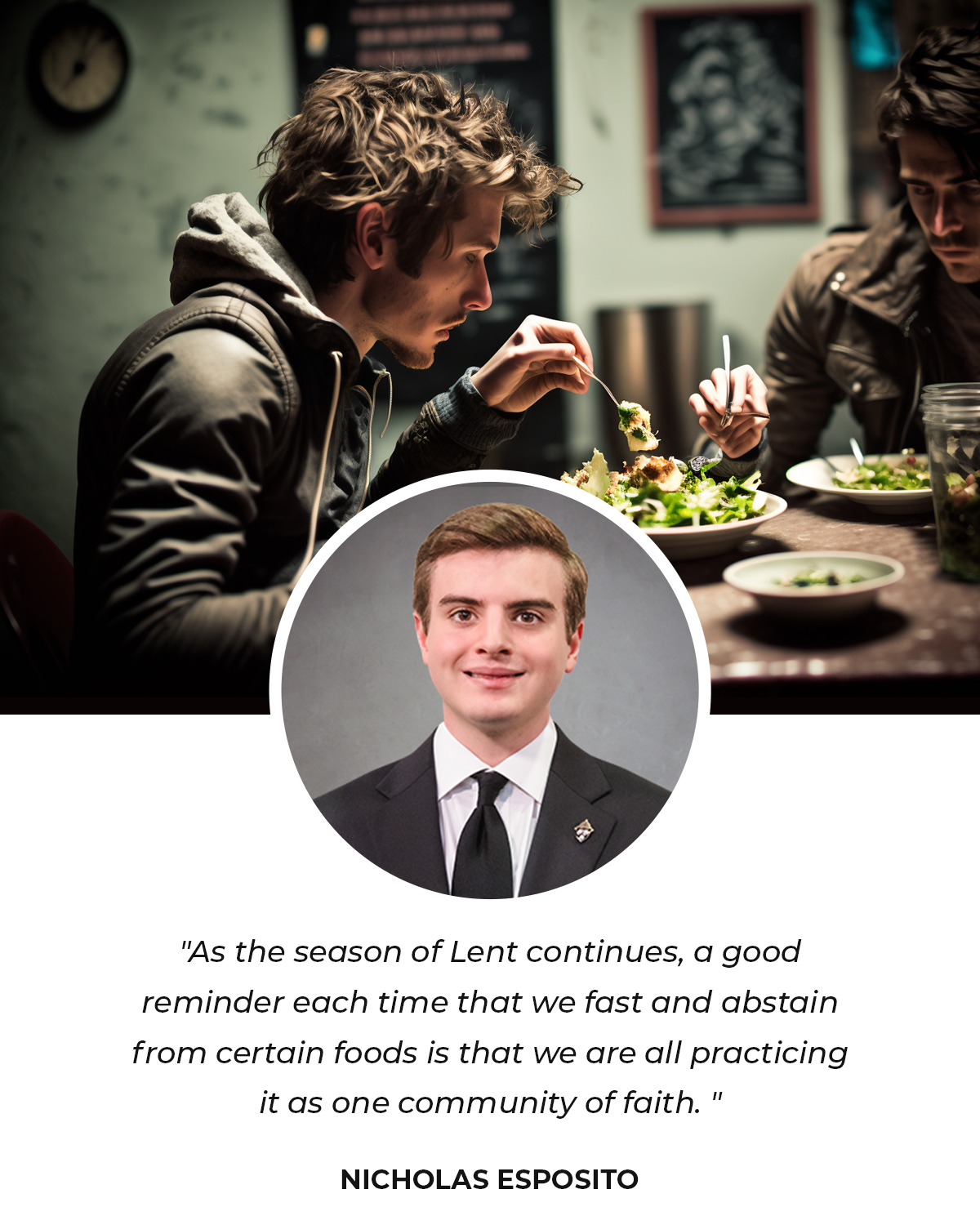
One of the main themes of the Lenten season is that of “fasting”. Most commonly, we find fasting used in the context of food although it can be used in other ways as well, such as fasting from material goods. Of course, fasting is not something that has taken place only in the 21st century. We see patterns of fasting and also feasting throughout history, especially in Sacred Scripture. There is a parallel commonly found between the practice of fasting and a practice of sacrifice. These two practices have some similarities and some differences, but many times work together. While sacrifice can seem daunting and difficult at times, it is helpful to view it as a way of healing and establishing membership with our fellow Christians. This common practice is ultimately about coming to a deeper understanding of others around us and becoming more aware of their needs through our own self-offering.
Many times, on Ash Wednesday and the Fridays during Lent, I find myself having a meatless meal and viewing it only in the context of myself. This year, however, I began to think about others who were practicing the same tradition. In this way, I was able to fast with others and come to a deeper appreciation for the connection of everyone being a member of the Body of Christ. Every time we abstain from meat or fast in between meals, we should remember everyone else who is doing the same and offer up that sacrifice to God. In this way, we become more closely connected to our sisters and brothers in Christ.
Fasting also helps us to become more aware of one of God’s many gifts that everyone partakes in. That gift is food. When we fast, we are able to evaluate ourselves and see how we look at food. Are we hoarding and degrading the gift of food or are we practicing thanksgiving for these gifts? When we see food as a gift, we come to a deeper union with God and a greater appreciation of the food and those who share it.
There is a temptation in fasting to make it about our own glorification. Many people who practice fasting outside of the season of Lent usually do so because it may help them lose weight or another purpose that would serve them in one way or another. If we see fasting during Lent as only an opportunity to improve our bodily image, we risk losing the sacrificial aspect and community aspect of fasting.
As the season of Lent continues, a good reminder each time that we fast and abstain from certain foods is that we are all practicing it as one community of faith. We can see the overall picture that after fasting there is feasting. When Easter arrives, hopefully we can look back on our fasting and our sacrifices and come to a greater appreciation for our gift of food as we remember the gift of Jesus Christ dying rising from the dead for us.

Nicholas Esposito
Latest posts by Nicholas Esposito (see all)
- Divine Mercy Sunday Reflection - May 9, 2023
- Fasting: An Act of Communion with Others - March 14, 2023
- The Changing of Seasons Leading to a Changing of Heart - January 3, 2023
